


Which business structure is right for you?
Deciding which structure is right for you? It’s important to consider your individual circumstances and long-term goals.
For example, operating as a sole trader may be right for you if you’re seeking a simple, cost-effective way to start a business. A limited company may be more suitable if you want to limit personal liability and support future expansion. The right structure will depend on how you intend to operate and develop your business over time.
Sole Trader
A sole trader is an individual who runs their own business as themselves, with no legal separation between the person and the business. This means unlimited liability, so personal assets are at risk. They pay income tax and National Insurance through self-assessment. It’s simple to set up with lower costs, but access to funding depends on personal credit.
Limited Company (LTD)
A Limited Company is a separate legal entity from its owners, meaning personal assets are protected (limited liability). The company can make contracts and continues even if owners leave. It pays Corporation Tax and must file accounts with HMRC and Companies House. It can be easier to get investment and loans, but costs are usually higher.
For more information, explore: What type of business should you be?
Limited Company | FAQs
Yes, you can hire a third party (e.g., an accountant or company registration service) to register your company on your behalf.
You do not need to hire an accountant or bookkeeper. As long as your records are accurate and up to date, then the process of filing your accounts is fairly straightforward. You can also purchase specific business accounting software solutions that will integrate with Companies House, to help make your accounting simpler. However, if you are unsure about any issues relating to your financial responsibilities, then consulting with an accountant is recommended.
Yes, you are legally required to open a business bank account to operate as a limited company.
No, you are not legally required to have insurance unless you have more than two directors (who are unrelated) or you hire an employee. If this occurs, you are legally required to take out employer’s liability insurance.
All other insurance covers are entirely options. However, it is generally recommended that you take out public liability insurance at the minimum. This will help cover legal defence costs if someone (e.g., a customer, supplier, delivery-person) was injured because of your business. The insurance can also help with compensation.
Sole Trader | FAQs
You do not legally have to open a separate bank account, but it is recommended that you do so because it will make filing your tax return simpler. If you did not open a separate bank account, your self-employed income would go on your personal baking card. This will make it inconvenient when bookkeeping as you will have to separate business expenses from your personal expenses.
Most high-street banks offer business banking for sole traders but there are also digital banks (e.g., Monzo and Starling) if you prefer.
As a sole trader, any funds you generate can be used immediately for personal use. However, you must ensure that you have enough funds left over to pay taxes. So, you should make sure you deduct some of your gross income for the purpose of paying taxes later on.
You do not need to hire an accountant or bookkeeper. As long as your records are accurate and up to date, then the process of filing your tax return is fairly simple. You can also purchase specific business accounting software solutions (such as Quickbooks) if you would prefer. These solutions often let link your business to your bank accounts, and handle receipts and invoices, which can simplify the bookkeeping process.
If you are unsure about any issues relating to your financial responsibilities, then consulting with an accountant is recommended.
No, you are not legally required to have insurance unless you hire an employee. However, it is generally recommended that you take out public liability insurance at the minimum. This will help cover legal defence costs if someone (e.g., a customer, supplier, delivery-person) was injured because of your business. The insurance can also help with compensation.
There are plenty of other types of insurance that may be useful for you. You can find some information about some of these here: What insurance does a new business need?
Yes. Self-employed individuals are subject to the same rules as any other business when it comes to VAT registration. The current VAT turnover threshold is £90,000 per annum.
So, if you earn over this amount and meet other eligibility criteria, you will need to register and start collecting VAT.
You can definitely become self-employed whilst being employed elsewhere. For example, you can work for an employer during the day and then run your own business during the evenings and weekends.
Yes, if you are self-employed, you are entitled to the same tax-free minimum as an employee. This is the amount you can earn before you start paying income tax.
If you were employed and self-employed at the same time, your personal allowance will most likely be used up by your regular employment. So you would pay income tax on your self-employed earnings.
You can trade under your own name, or you can choose another name for your business. You do not need to register your name, but you must include your name and business name (if you have one) on official paperwork (e.g., invoices and letters).
- Include ‘limited’, ‘Ltd’, ‘limited liability partnership’, ‘LLP’, ‘public limited company’ or ‘plc’.
- Be offensive.
- Include a ‘sensitive’ word or expression or suggests a connection with government or local authorities (e.g., saying ‘accredited’ or ‘institute’). You can find out which words you need permission to use, and who from.
It’s also recommended that you avoid using a name or logo that’s registered as a trade mark or is already being used, because the owner can take legal action against you. If you would like to stop other businesses using your name or logo, you can register a trade mark.
You do not need to start using Making Tax Digital for Income Tax until after you have submitted your first self-assessment tax return, but you can choose to sign up early.
If you have already submitted a self-assessment tax return, then (for the 2026/27 tax year), you will need to use Making Tax Digital for Income Tax if all of the following apply. You:
- Are an individual registered for Self Assessment.
- Get income from self-employment or property, or both.
- Have qualifying income of more than £50,000: Read more about what qualifying income is and what is included.
Choosing a business model
For information on choosing a business model, whether you’re looking to set up a Service-based business, Product-based business, Subscription-based business or you’re looking to buy a business or franchise, visit Choosing a business model | Business.gov.uk
Articles

Opportunities to work with the Growth Hub
Invitation to Quote Opportunities We are currently seeking providers to deliver business support programmes on behalf of the York & North Yorkshire Growth Hub, with a number of Invitation to
Workplace Wellbeing & Suicide Prevention: Resources
Mental health can affect anyone, and the workplace can play an important part in making sure people have the right support when they need it. For employers, knowing how to approach sensitive conversations or where to turn for help can sometimes be difficult.

Yorkshire manufacturer pioneers AI adoption as first in North Yorkshire to secure Made Smarter grant funding
Tadweld, a North-Yorkshire based steelwork manufacturer Tadcaster-based engineering and has become the first in its region to commence an artificial intelligence project through Made Smarter Yorkshire & Humber’s Intensive Technical Support programme.
Resources
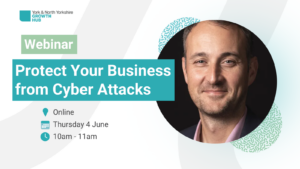
Webinar Recording: Protect Your Business from Cyber Attacks
Delivered by the North East Cyber Resilience Centre (NECRC), this webinar is designed to help SMEs strengthen their cyber resilience and understand the practical steps needed to protect their business from increasingly common cyber threats. Alongside this, attendees will be offered free membership of the NECRC and access to funded cyber security services.
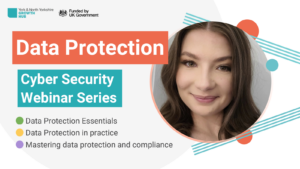
Webinar Series: Data Protection
In this engaging and practical webinar series, Privacy Protect Group Ltd will guide you through everything you need to know to build a confident, compliant, and resilient approach to data protection in your business. Whether you’re just starting out or looking to refine your practices, each session is designed to build your understanding step-by-step.
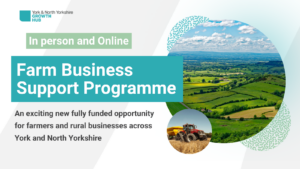
Farm Business Support Programme: Webinar Recordings
This programme is a designed to help farm businesses understand where they are now, where they want to be next, and how to make confident decisions in a fast-changing industry. The focus is simple: real world, farm focused business skills that can be applied straight back at home.